Google Pixel Tech Support Pilot
Overview
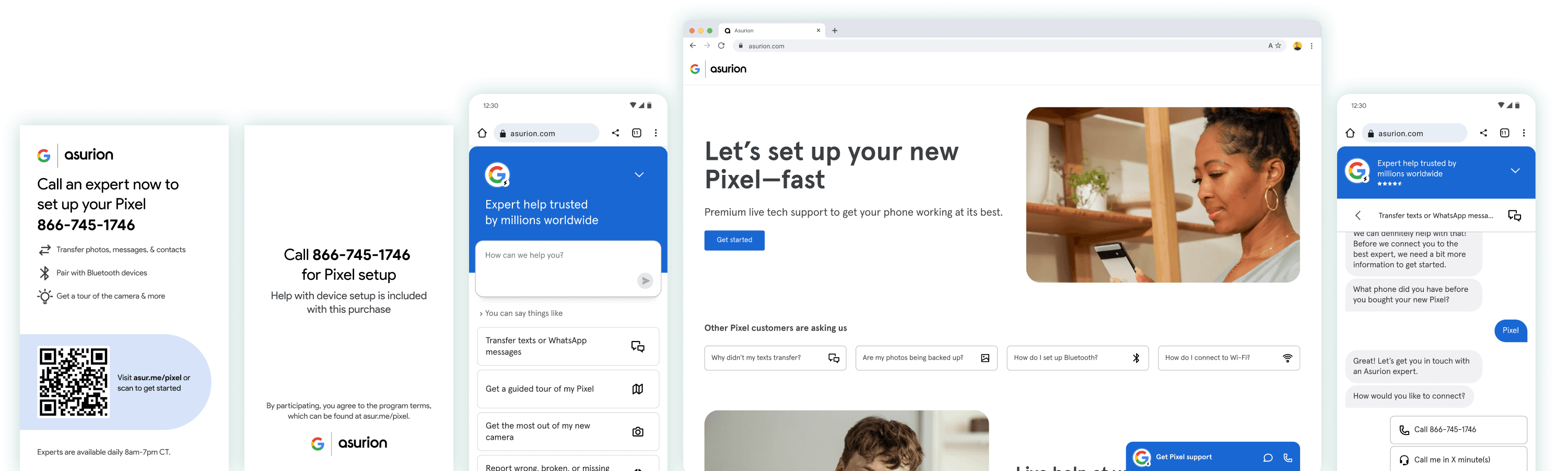
I led the design of Asurion’s first tech support pilot in partnership with Google, collaborating with internal and client teams to research, design, and launch a program that provided expert setup support through a digital experience, supported by a physical leaflet, for customers purchasing new Pixel devices.
This pilot was a significant cross-functional milestone. Its success unlocked additional opportunities and strengthened Asurion’s partnership with Google, ultimately securing long-term business.
Timeline
90 day pilot
Launched 9/27/2024 and ran through January 2025
Hypothesis
How we measure success
Research & Discovery
I partnered with our Design Research team to conduct five 35-60 minute interviews with people who have purchased a Pixel in the last 12 months and four interviews with people who have purchased a Pixel in the last three months or less. This was Asurion’s first pilot with Google and Pixel phones specifically, so we wanted to understand the unique pain points for Pixel phones that can be solved with dedicated onboarding support.
Interview themes
1
Many enjoyed the customization features offered by the Pixel
2
Confusion about how phone vs cloud storage works
3
“Hidden” or not widely known/advertised features that are actually useful
Resulting ideas
Tailor the experience based on what we know Pixel users care about
HMW highlight some of the unique Pixel features to customers during the onboarding process?
Widget prompts and onboarding page content should reflect common issues we know customers are having (storage, photos, transferring texts) or common features customers are interested in (camera, customization, Google Lens, Google Assistant, Google News)
Dogfooding
I dogfooded the existing Pixel unboxing experience with the help of my co-workers. We measured the dimensions of the shipping box and evaluated the existing packaging and other print materials sent with a new Pixel phone. Through this dogfooding experience, I was able to get a better sense of how partner branding should be designed and executed with Google based on their digital and physical materials.
Solution
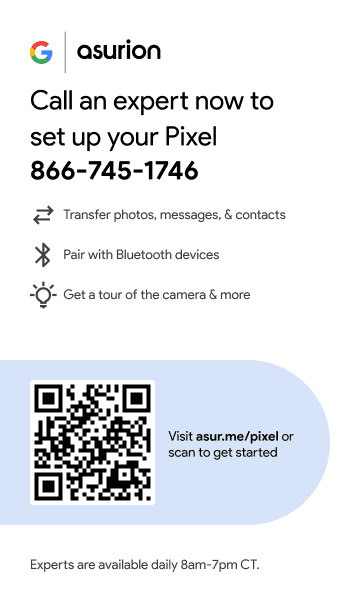
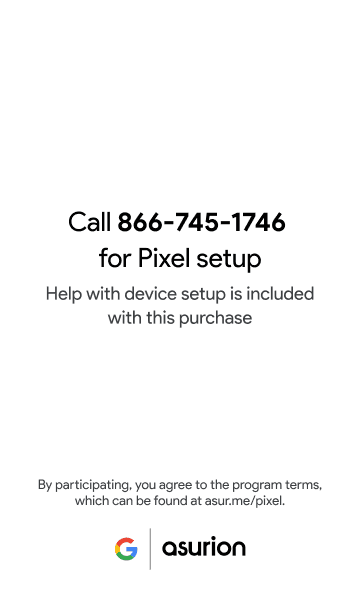
Part 1: Physical leaflet
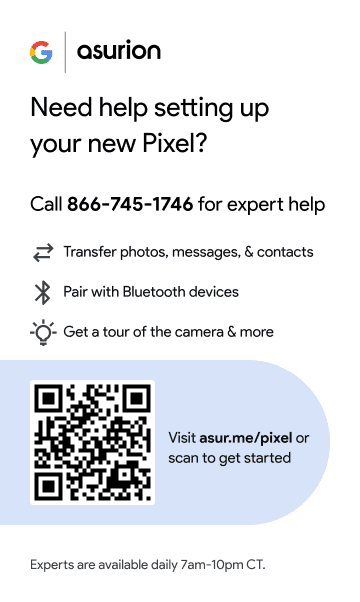
I designed a print leaflet included in customers’ shipping boxes to promote the expert setup benefit at the moment they unbox their new device. Customers can scan the QR code to visit the digital experience or call directly.
The leaflet was created in Figma and finalized in Illustrator for proofing and print production.
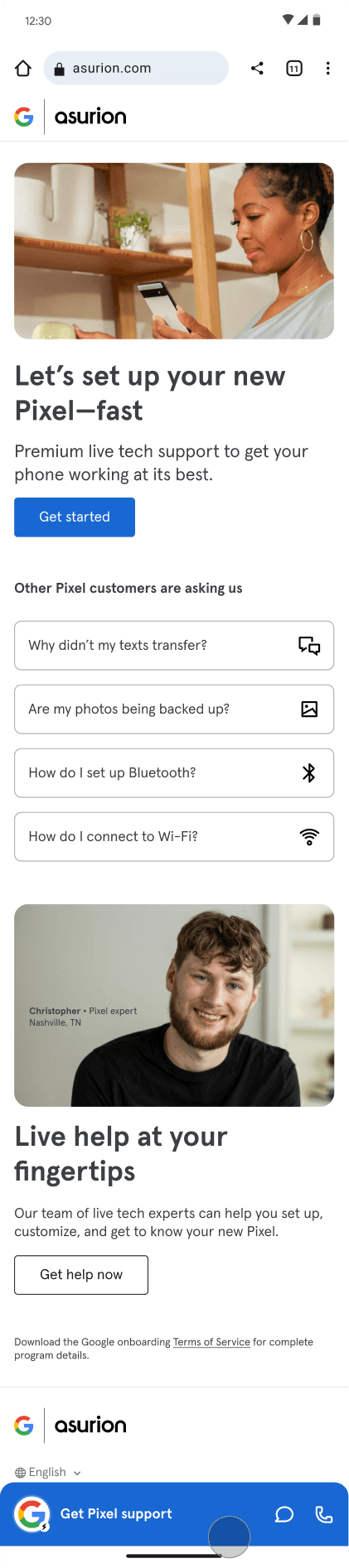
Part 2: Digital experience
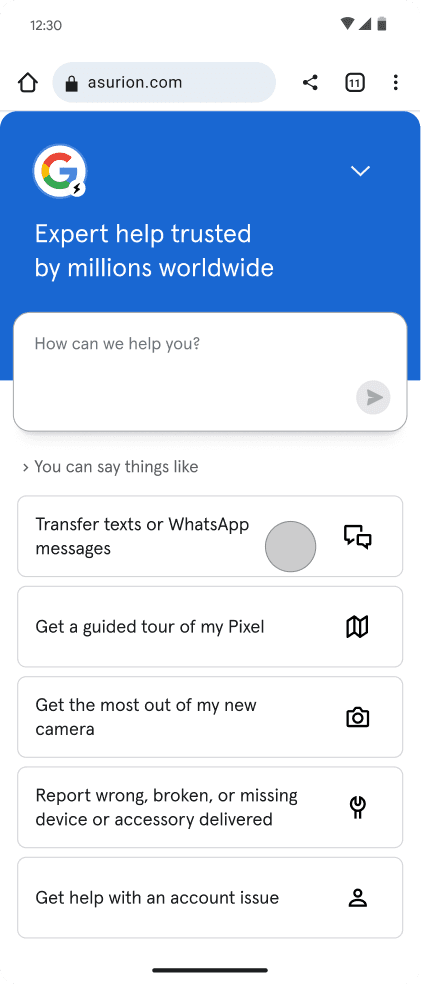
I designed a digital experience that helps customers understand their onboarding benefits, explore support topics, and connect with an expert. This included a landing page and chat widget that triage customer needs and route them to the appropriate support channel, either by calling directly or scheduling time with an expert immediately or later. The experience was based on Asurion’s existing onboarding support for Verizon and AT&T customers.
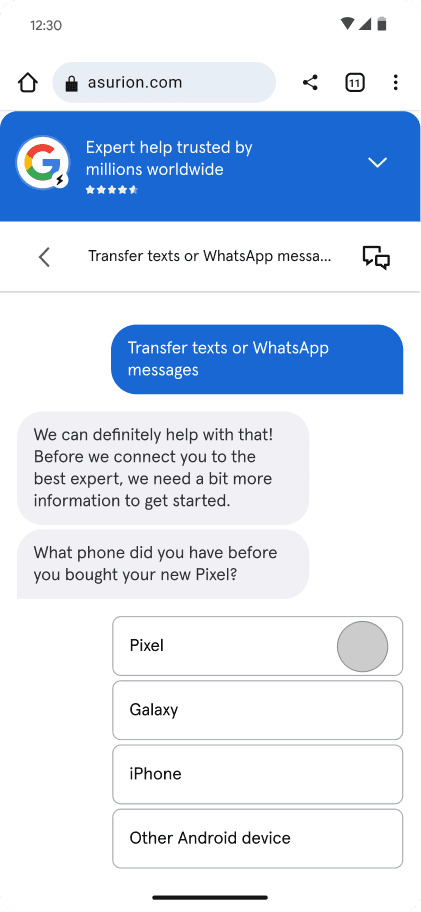
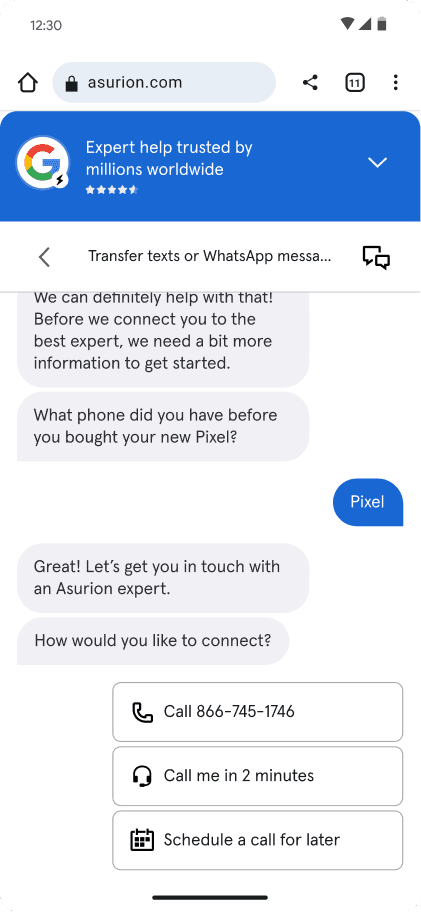
Happy path digital flow
Conversational Design
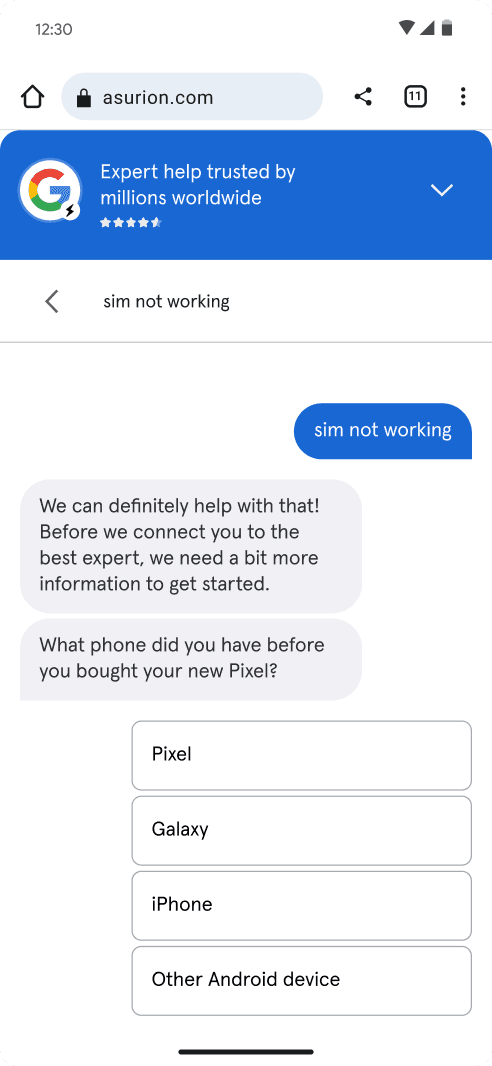
As part of designing and developing the chat widget experience, I worked closely with a content designer and our Data Science and Logic Builder teams to come up with the conversational flow and custom responses. The chat widget was not AI-powered due to client and legal restrictions, so we used intent detection and created categories for triaging customer needs. Depending on what category they needed help with, we created custom conversational flows that directed them to the appropriate support option. This created a smarter, more dynamic chat experience while aligning with client requirements.
Category: New device set up and non-setup questions
Examples:
Activation
Transfer texts or WhatsApp messages
Get a guided tour of my Pixel
Get the most out of my new camera
Help connecting headphones
Help connecting to Wi-Fi
Calls and texts still going to old device
Issues with software or app updates
Change display settings
Route to:
Asurion expert
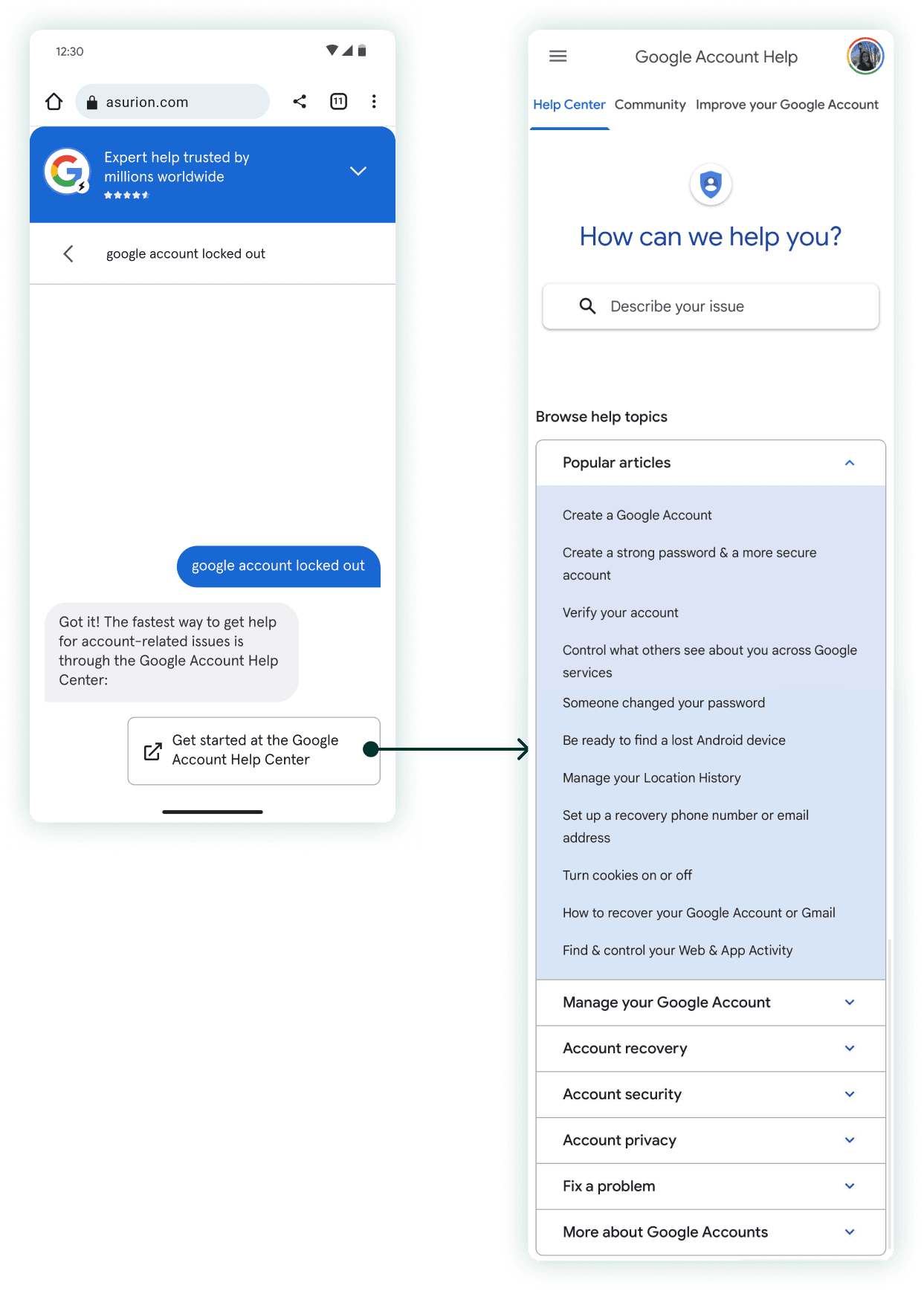
Category: Account questions
Examples:
Can’t log into account on Pixel
Get help with an account issue
Route to:
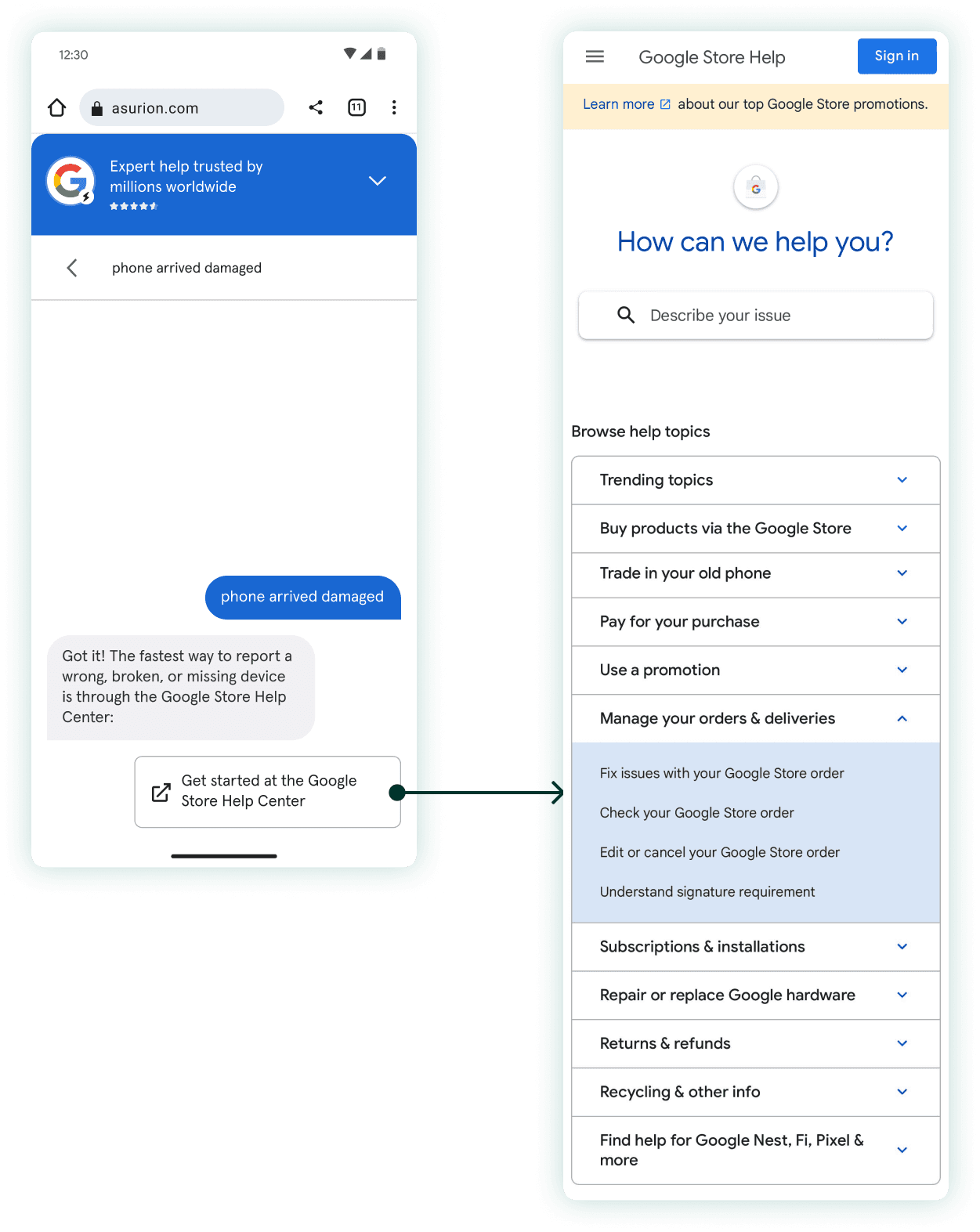
Category: Issue with missing/broken device or accessory delivery
Examples:
Wrong make/model delivered
Missing or broken accessory
Didn’t come with cable
SIM tool missing
Adapter not working
Broken screen on phone
Phone won’t turn on
Route to:
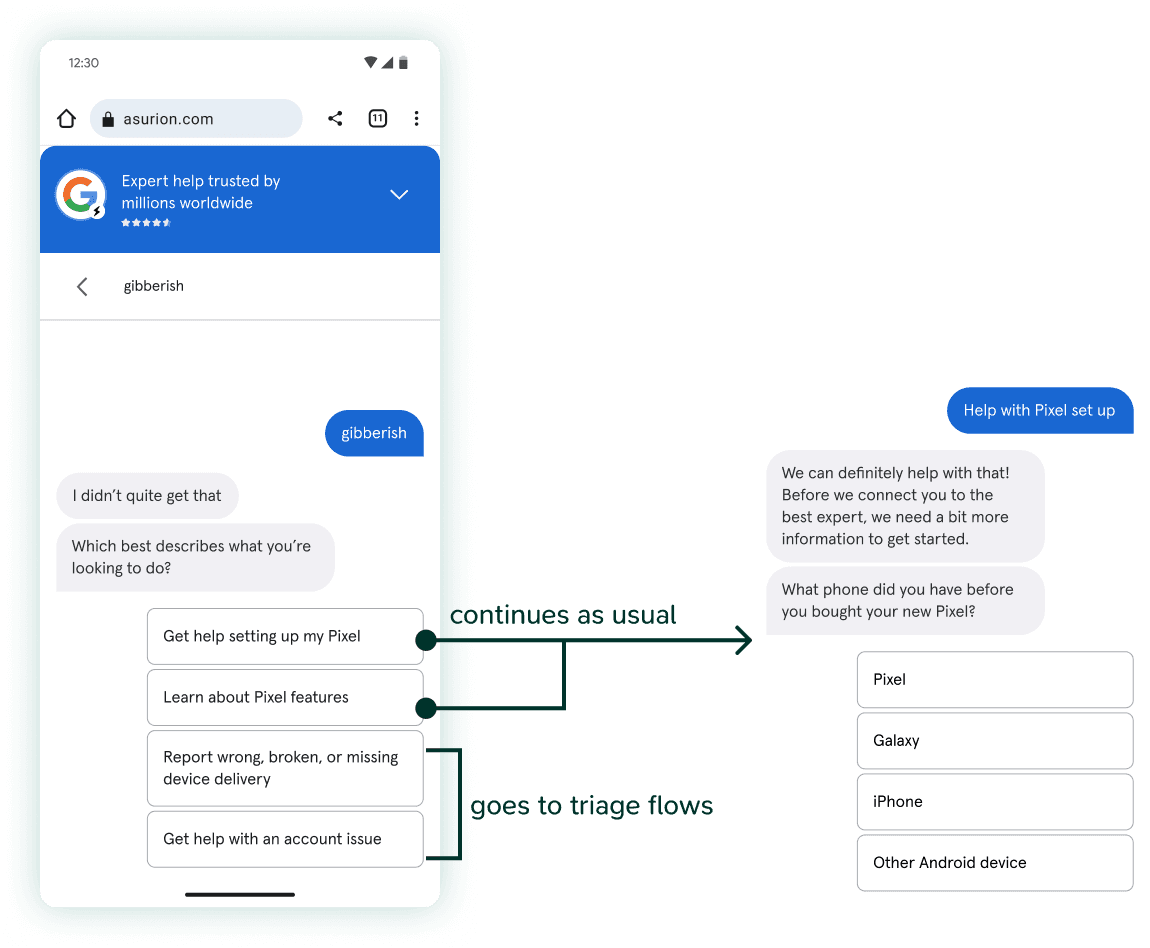
Category: Unknown/input not recognized
If the LLM doesn’t recognize or know how to categorize the query on the backend, we ask the customer to self-categorize.
Examples:
Customer types something the model can’t categorize
Customer types gibberish
Customer types something random like “cats”
Route to:
Asurion expert or Google, depending on what customers self-selects
User Testing
We tested the digital experience using UserZoom with 15 participants. The goal was to test the usability of the CX, clarity of copy on the landing page and chat widget, and determine if users can successfully complete key tasks.
Results

Clear CTA
Users clearly understood that the primary and secondary CTAs on the page were designed to connect them with customer support via call or chat.
Intent Tile Visibility
The intent tiles on the landing page and chat widget stood out to users.
Input Field Interest
Users were drawn to using the input field on the chat widget landing page.
Follow up tests & Refinements
Following the initial launch in September, both internal stakeholders and the Google team proposed enhancements to further test, refine, and optimize the experience.
Leaflet copy adjustments
The Google team requested changes to the print leaflet for the second batch of leaflets sent out. We tested softer language to make the CTA feel less mandatory, per Google’s request.
Auto-open functionality
We also tested auto-opening the widget once the landing page loads. Widget engagement increased 8% as a result of this change.
Additional A/B tests
I proposed multiple post-launch tests to help increase engagement and conversion. It was ultimately up to the clients what we were able to test during the pilot duration.
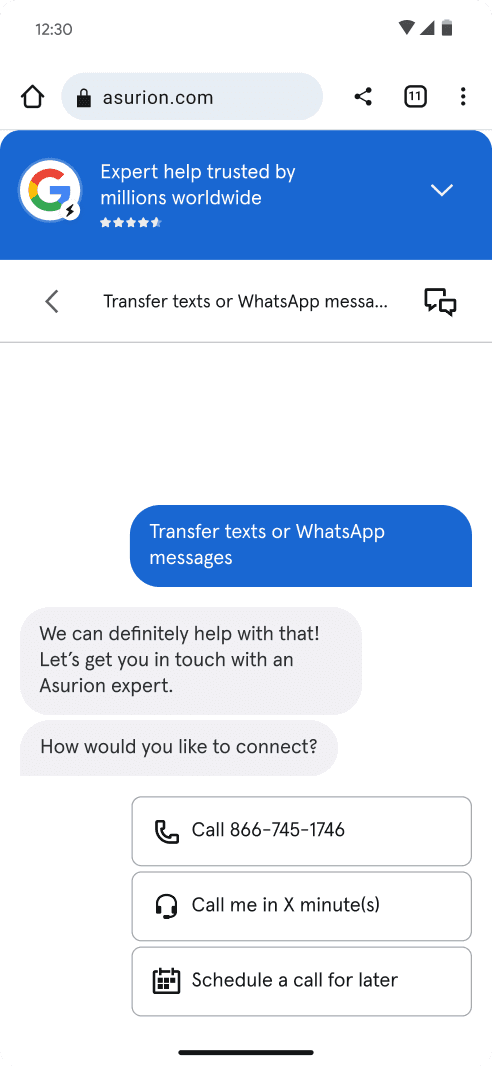
Proposed Test #1
Description
Remove "What phone did you have before you bought your new Pixel?” question
Hypothesis
Reducing the number of questions will increase conversion and live contact rate
New conversational flow
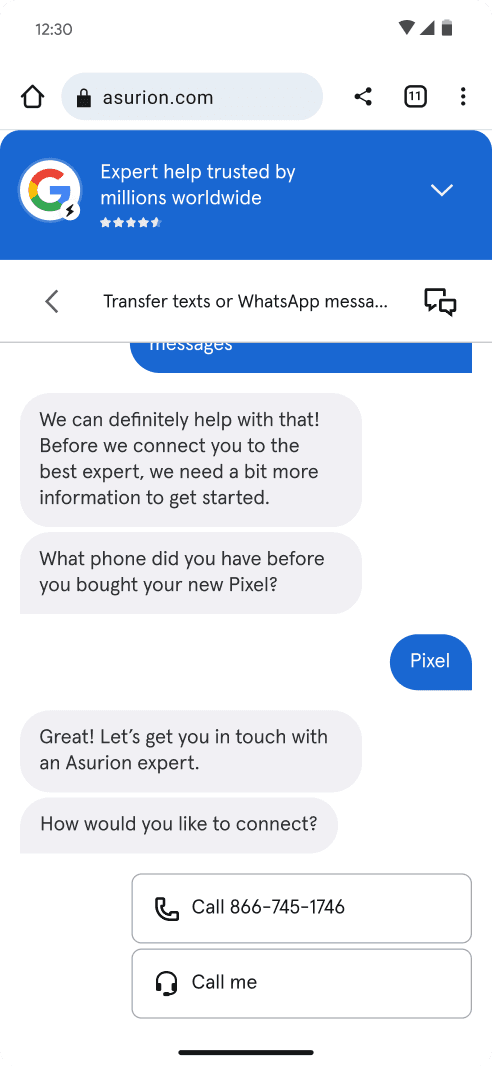
Proposed Test #2
Description
Combine "Call in X minutes" and "Schedule a call for later" into a single callback option
Hypothesis
Reducing options will reduce cognitive load and lead to more conversions
New flow
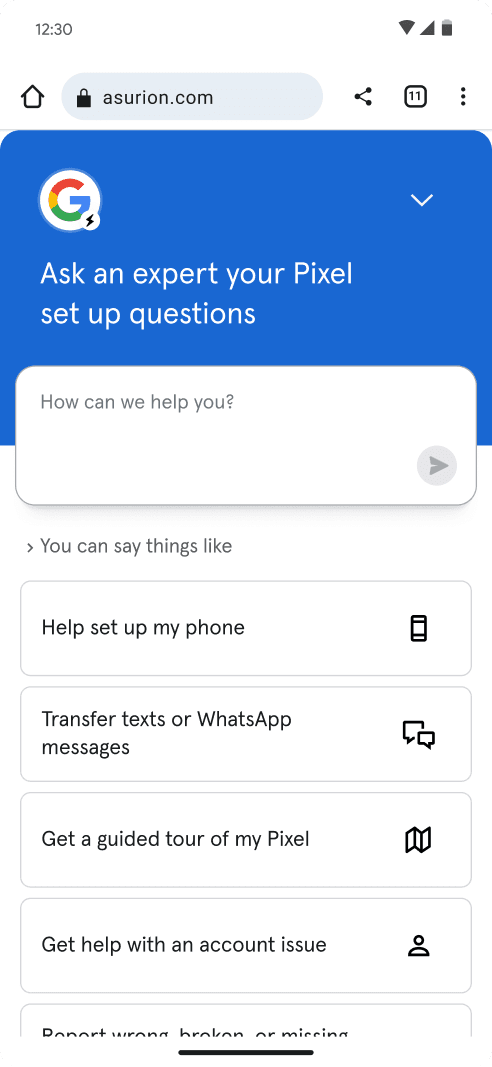
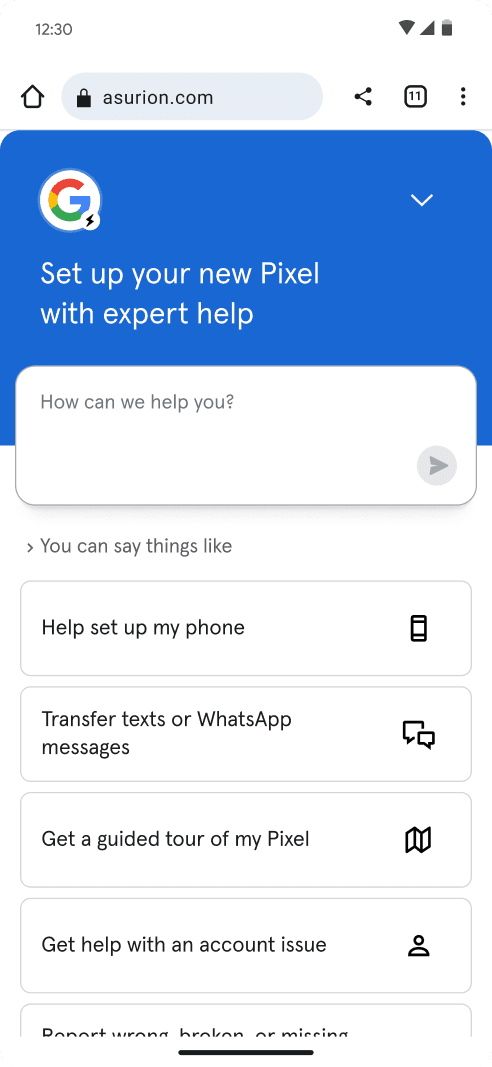
Proposed Test #3
Description
Update widget headline to be more 'setup' specific
Hypothesis
Clearer direction will result in more engagement
Headline variations
This pilot was launched to a subset of Pixel 8 and 9 purchases within the Chicagoland area. 3000 copies of the leaflet were printed and distributed in the first batch. Within the first month, 20k devices were shipped with the leaflet. Asurion received 485 calls (2.3% of users). 11% of callers used the digital flow, 89% of callers came from the physical leaflet. Direct dial was the most preferred option out of the three choices.

This was Asurion’s first pilot in partnership with Google. It was a huge milestone and cross-functional team effort. Its success secured more opportunities for pilots and ultimately long-term business in partnership with Google.
Read my next case study ->